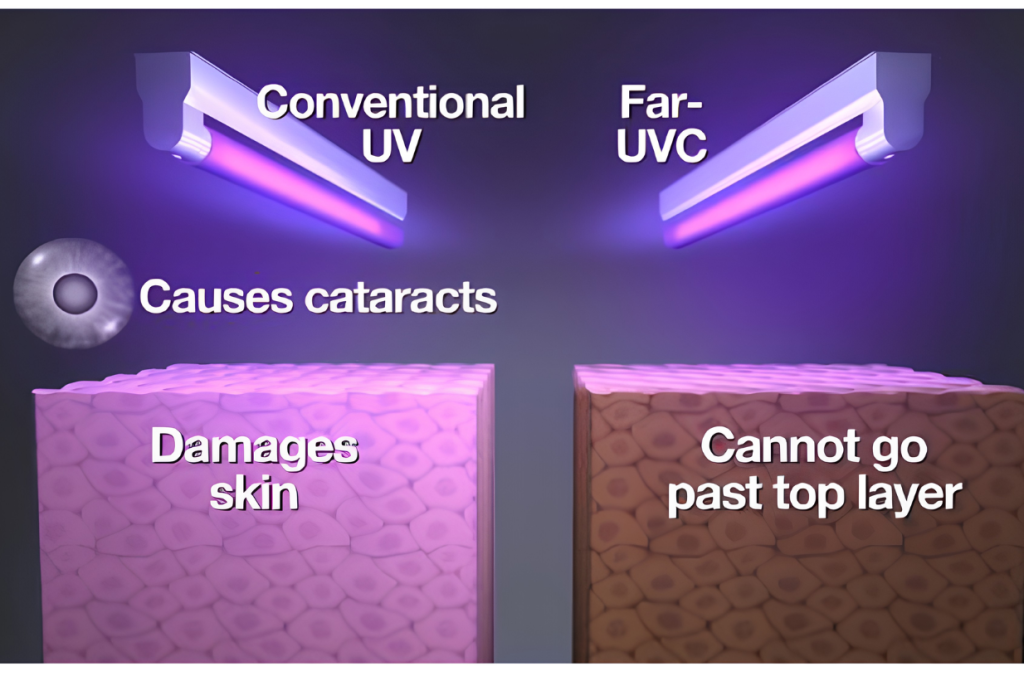
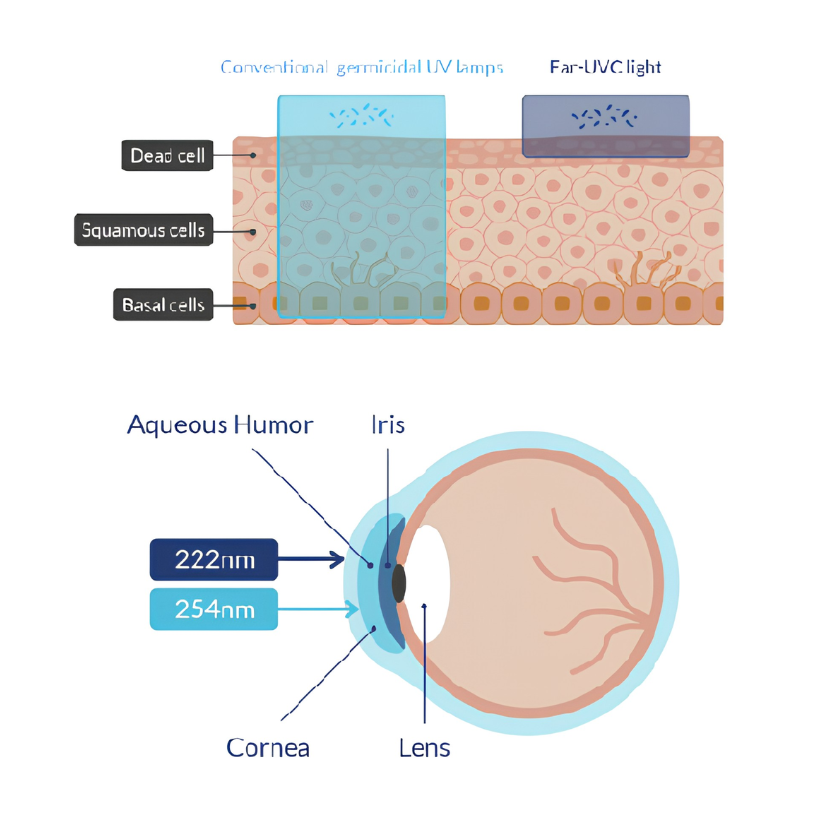
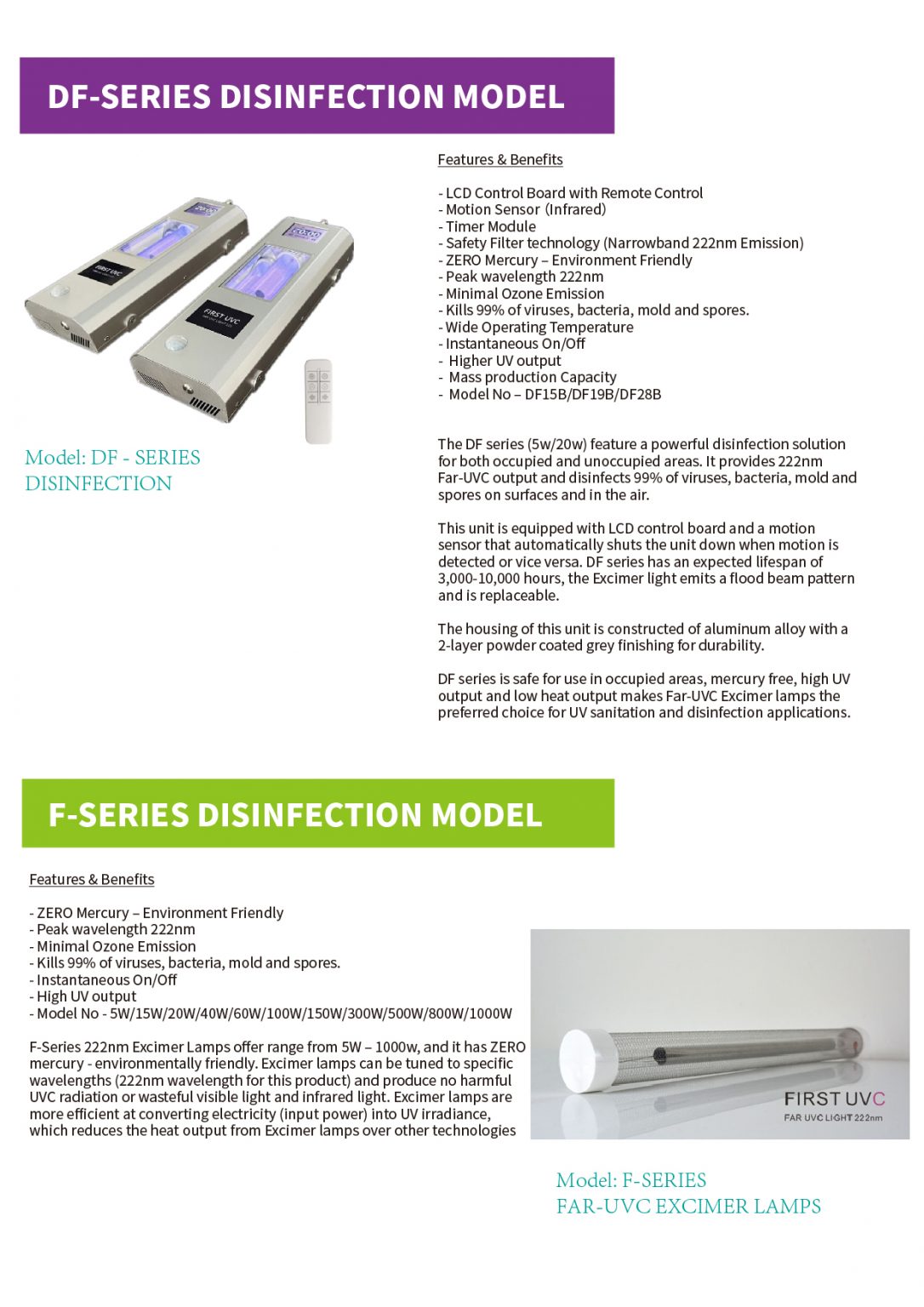
Ultraviolet radiation C (UVC) is defined as 100-280nm wavelengths UV. UVC from solar UV cannot reach the surface of the earth, because this range of UV is absorbed by the ozone layer. Conventional germicidal UVC light (254nm wavelength) can be used to disinfect unoccupied spaces such as empty hospital rooms or empty subway cars, but direct exposure to these conventional UV lamps is not possible in occupied public spaces, as this could be a health hazard.
As an alternative, far-UVC light (207-222nm) has been reported that it efficiently kills pathogens such as Coronavirus potentially without harm to exposed human tissues. This is because, due to its strong absorbance in biological materials, far-UVC light cannot penetrate even the outer (non-living) layers of human skin or eye; however, because bacteria and viruses are of micrometer or smaller dimensions, far-UVC can penetrate and inactivate them.
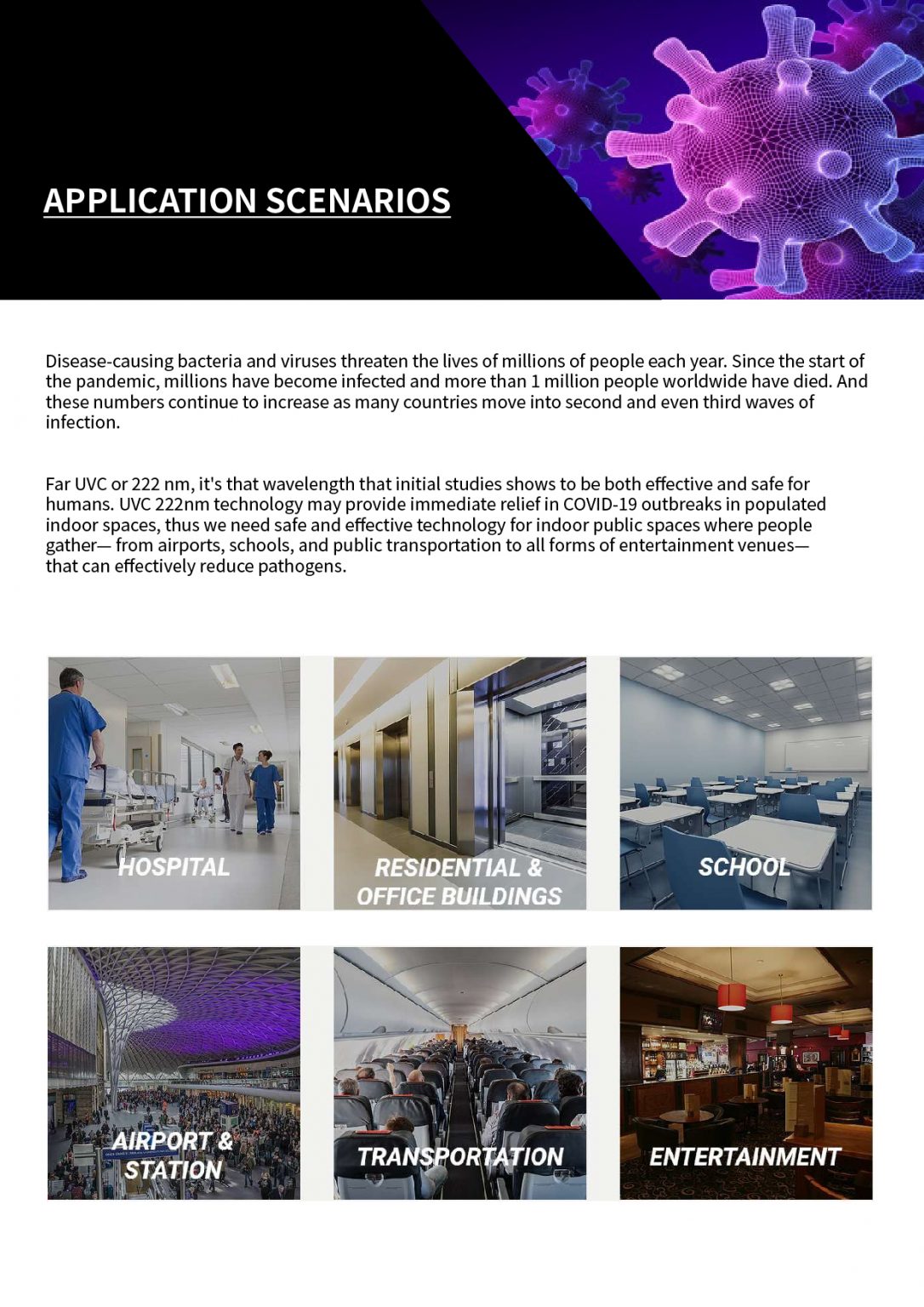
Continuous low dose rate far UVC light in indoor public locations is a promising, safe and inexpensive tool to reduce the spread of airborne-mediated microbial diseases. Bases on the latest research results, continuous far–UVC exposure in occupied public locations at the current regulatory exposure limit (~3MJ/cm square per hour) would result in 90% viral inactivation in 8 minutes, 95% in 11 minutes, 99% in 16 minutes and 99.9% inactivation in 25 minutes.