
AI Stock Take Robot
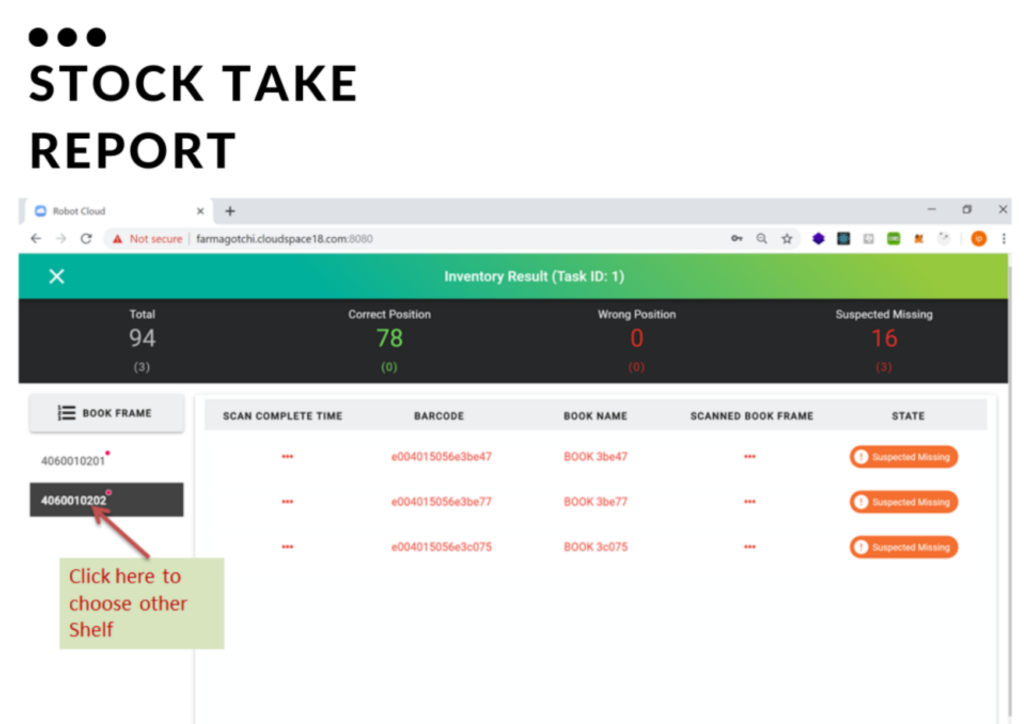
The AI Stock Take Robot is an autonomous mobile robot that counts and audits stock on its own, combining dual-frequency RFID — HF for small items such as books and cards, UHF for larger collections at greater range — with AI image processing and SLAM navigation. It scans shelves on a schedule you set, and returns a report telling you not only what is there, but what is in the wrong position and what is suspected missing.
HF + UHF
Dual-frequency RFID reading
AI vision
Image recognition of stock items
SLAM
Autonomous navigation & obstacle avoidance
Scheduled
Runs as often as you require, unattended
What is an AI stock take robot?
An AI stock take robot is an autonomous mobile robot that performs inventory counts by driving the aisles itself, reading RFID tags and recognising items with cameras, then uploading the results to a cloud system.
AI image processing has brought large improvements to tracking merchandise across the retail supply chain, and the cost of the technology has fallen sharply in recent years. The benefits are straightforward: it virtually eliminates human error in stock tracking and gives far higher inventory visibility.
Traditional inventory-taking means a person walking the aisles with a handheld reader, or counting items by hand. Both are slow, and both are only as consistent as the person doing them at the end of a long shift.
An AI stock take robot goes a step further than a handheld reader: it lets you programme regular, automated inventory tracking and data collection, rather than scheduling a count as a project each time.
Because the robot works unattended, the constraint on counting frequency stops being labour. Sites that counted quarterly can count weekly, and discrepancies surface while they are still cheap to fix.
How the AI Stock Take Robot works
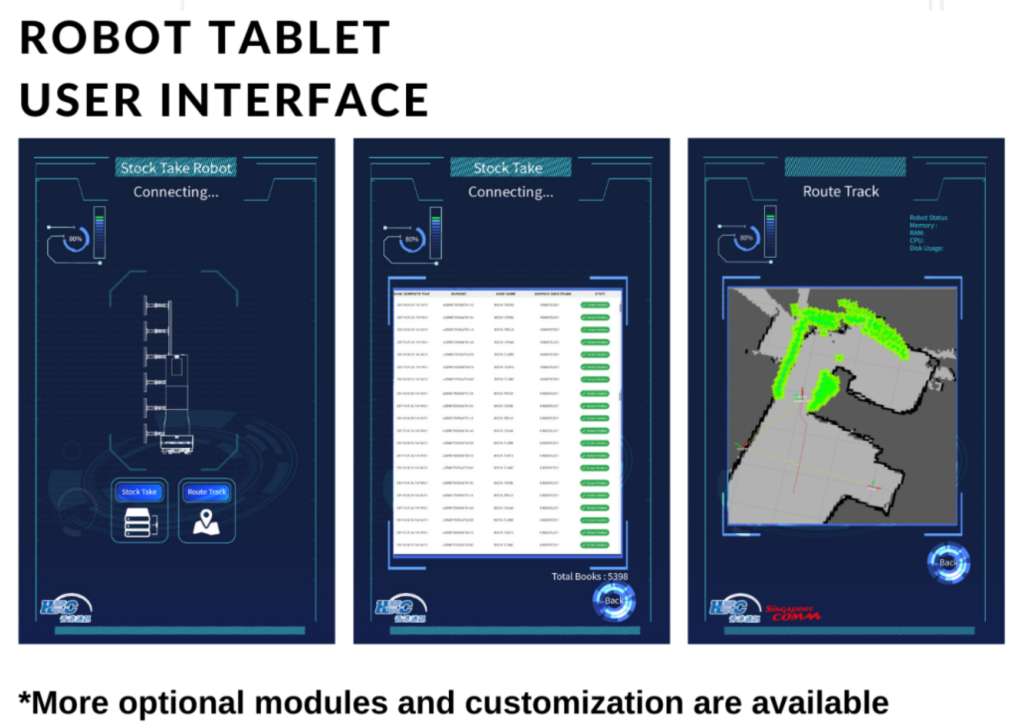
The robot carries cameras and RFID antennas. As it moves within range of a shelf it reads the tags, scans the images, and updates its records in the cloud.
HF and UHF RFID, together
HF (High Frequency) gives precise tracking of smaller items such as books and cards. UHF (Ultra High Frequency) scans larger collections at greater distances. Carrying both means one robot covers close-range precision work and long-range bulk reading, rather than forcing a choice between them.
AI image processing
Vision cameras enable image recognition of stock items alongside the tag read. The image pipeline stores product information that is then available through the back end, so the robot verifies what it sees as well as what it reads.
Locating tags by antenna timing
The reader emits radio waves through several antennas. Tags bounce the signal back and the same antennas receive it. By measuring the distance estimated from each antenna's reception time, the reader calculates the approximate location of every tag relative to the robot — which is what makes “wrong position” detection possible.
SLAM navigation
Lidar and cameras let the robot perform SLAM — simultaneous localisation of its own position and mapping of the area. It avoids obstacles including people and furniture, docks and charges itself, and locates itself inside a store or warehouse continuously as it collects data from each tag.
Capabilities
What changes once counting stops being a manual job.

Popularity trends identification
Regularly programmed inventories reveal popularity trends, including data on the volumes of books being borrowed — insight a periodic count cannot give you.
Reduce labour cost
The robot moves around the area itself, so robotic stock-taking removes the labour cost of walking the aisles with a handheld reader.

Free staff for higher-value work
Doing inventories by robot frees staff for work that needs a person — and, in a library, gives them more time to spend with patrons.
Designed for modern facilities
Proven across four environments where stock sits on shelves and needs counting often.
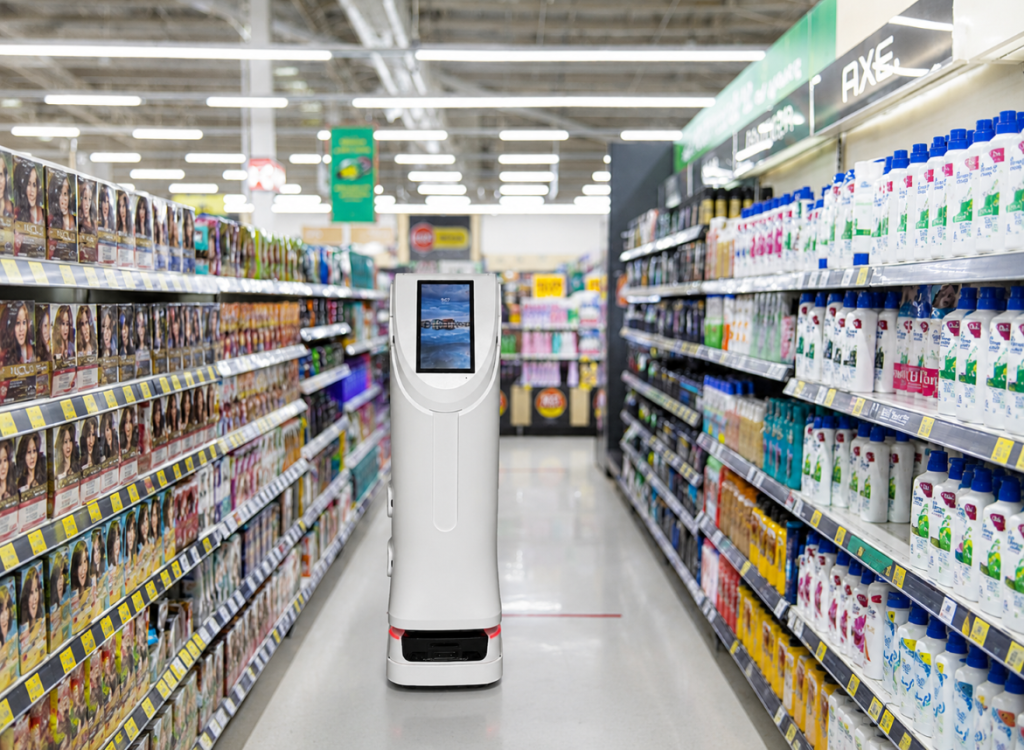
Library
The AI stock take robot enhances libraries by automating inventory management, increasing accuracy, and freeing staff to focus on engaging with patrons and improving services. HF RFID suits book and card tagging precisely.
Supermarket
Scheduled shelf counts in a live trading environment — SLAM obstacle avoidance handles shoppers, trolleys and promotional stands.
Archives & records
Large tagged collections where a full manual audit is impractical, and where position accuracy matters as much as presence.
Warehouse
Cycle counting across racking without pulling staff off picking. UHF gives the range needed to read tagged stock at height and depth.
Retail stores
Higher inventory visibility across a store estate, so customers find the products they are looking for and gaps are caught before they cost a sale.
Multi-site operations
Cloud reporting means several sites are counted to the same method and compared on the same basis, rather than each keeping its own paperwork.
Other AI robotics
Find out other AI robot solutions
_______
LIBRA Stock Take Robot
____
Humanoid
____
AI Robotic Arm
____
Quadruped Robot
____
Mini Automated Guided Vehicle
____
Autonomous Delivery Robot
Advanced navigation, obstacle avoidance, and intelligent route planning
______
Autonomous Cleaning Robot

Tell us the task, not the robot
Describe the work you want automated — what moves, how often, how far, and how many people it takes today. That is enough for HKC to say which robot fits, whether the numbers work, and what a pilot would involve.