
Mini Automated Guided Vehicle (mini AGV) Robot
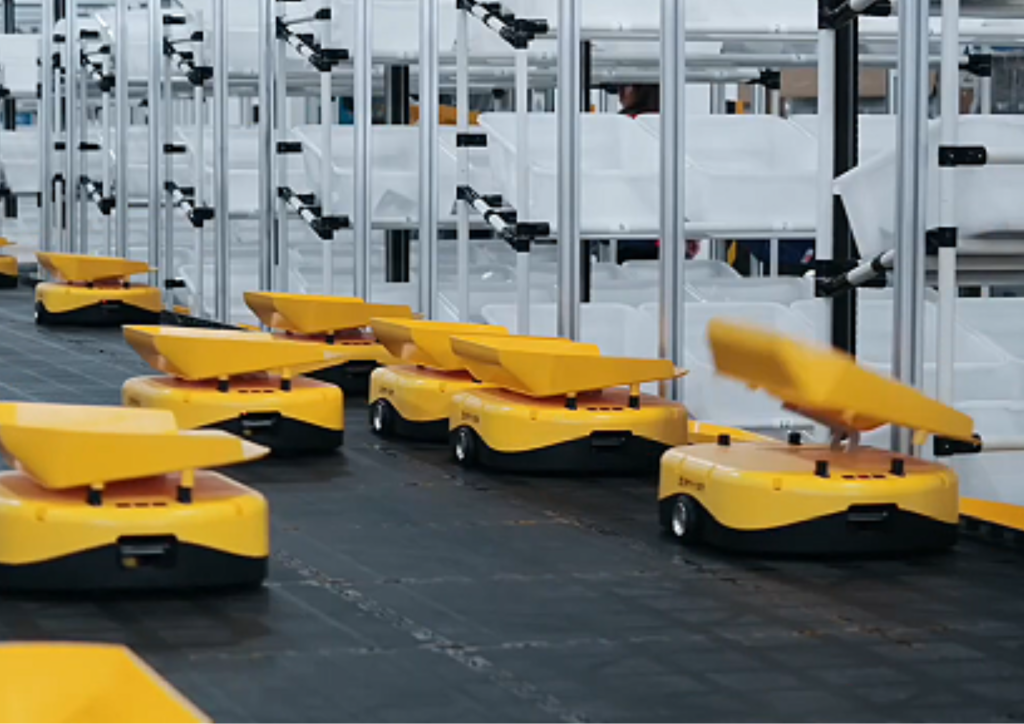
A mini AGV is a compact, self-driving vehicle that carries a light load from one point to another and hands it off on its own. Put a few on the floor, or a few hundred — the layout is software, not steelwork.
Mini AGV robots automate the transportation of materials, components, and goods across warehouses, factories, and production facilities, helping businesses improve intralogistics efficiency and reduce repetitive manual handling.
CARRY
Takes on a light load at a pick-up point and holds it steady in transit.
Navigate
Works out its own route and keeps clear of people and other vehicles.
Hand off
Places, tips or lifts the load at the destination without an operator.
Recharge
Returns to a charging point on its own and rejoins the fleet when ready.
Somewhere between a conveyor and a forklift.
Two things define the category, and both follow from the size.
Small enough to work in numbers
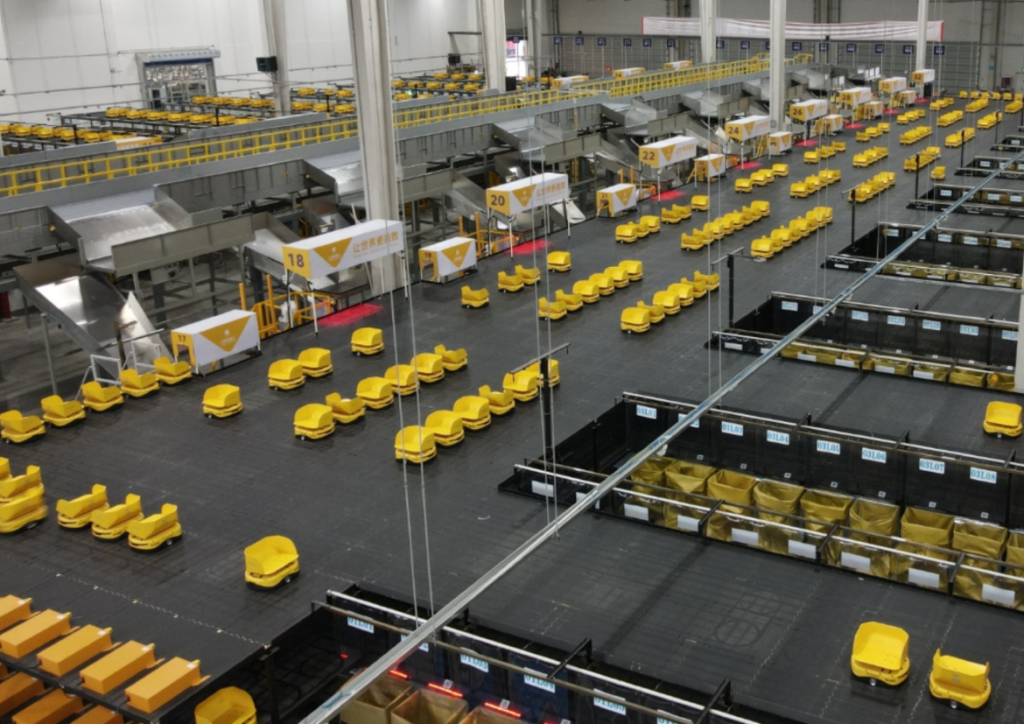
A mini AGV is built to be one of many rather than one of a few. Because each unit is light and inexpensive relative to fixed handling equipment, capacity is added by adding vehicles — not by rebuilding the system.
Coordinated by a fleet controller
Individual vehicles are simple. The intelligence sits in software above them, which assigns jobs, keeps traffic moving and decides when a vehicle should go and charge.
Guided, but not constrained
The vehicle follows a route rather than a rail. Change the destinations and the traffic pattern changes with them, usually without anyone picking up a tool.
Light loads, many destinations
The economics work best where items are small and the number of possible destinations is high. Heavier or bulkier work stays with larger AGVs, tow tractors and lift trucks.
Anywhere small things go to many places.
The pattern repeats across industries: high destination count, modest item weight, and demand that will not sit still long enough to justify fixed equipment.
Warehousing & Fulfilment
Moving totes, cartons and picked items between storage, pack and despatch without a person walking the distance.
Returns Processing
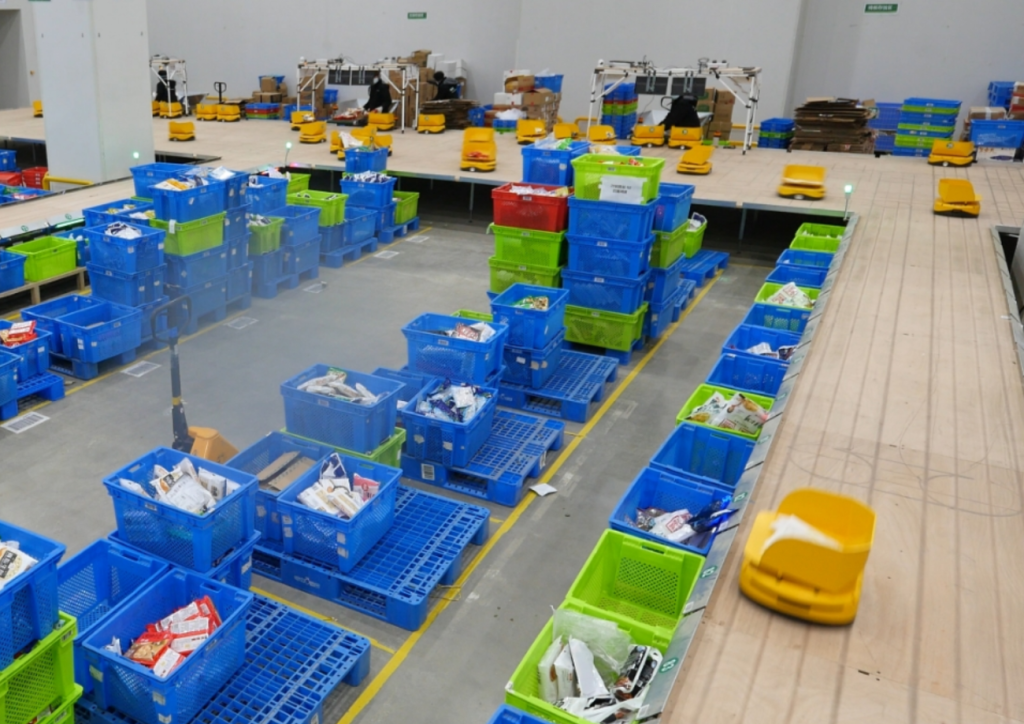
Work that arrives unsorted and unpredictable, where destinations need remapping by the shift rather than by the installation.
Manufacturing Supply
Feeding parts and kits to assembly stations, and clearing finished work away, on a rhythm set by the line itself.
Parcel & Post
Sorting items to route, round or driver at depots where the destination map changes far more often than the building does.
Hospitals & Labs
Carrying samples, supplies and records between departments — short, frequent trips that otherwise fall to trained staff.
Retail back-of-house
Replenishment between stockroom and shop floor in buildings never designed around material handling.
Other AI robotics
Find out other AI robot solutions
_______
LIBRA Stock Take Robot
____
Humanoid
____
AI Robotic Arm
____
Quadruped Robot
______
Autonomous Cleaning Robot
_______
AI Vision Stock Take Robot
AI image processing algorithm automatically scans for efficient inventory management
____
Autonomous Delivery Robot
Advanced navigation, obstacle avoidance, and intelligent route planning

Tell us the task, not the robot
Describe the work you want automated — what moves, how often, how far, and how many people it takes today. That is enough for HKC to say which robot fits, whether the numbers work, and what a pilot would involve.